
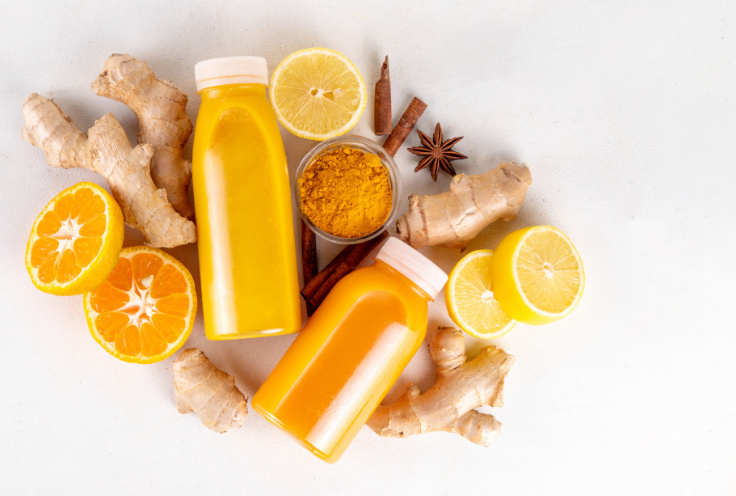
I was sitting in the subway the other day. It was prime-time and crowded with people heading home from work. The people around me started coughing. It sounded awful and I immediately felt my own throat getting scratchy. But I don’t have time to get sick (I mean, who actually has?), my weekend is packed with social activities and the deadline at work is also approaching.
Back in the days I would have grabbed one of those ginger shots from the supermarket. Maybe pick up vitamin C tablets from the pharmacy. Doing everything I see online to “strengthen my immune defenses”. Of course I want to do something, because waiting to get sick feels stupid.
But here’s what I learned studying the immune system during my PhD: you don’t actually want to “boost” your immune system. The whole concept, as it’s marketed, is scientifically backwards. Getting sick, is not a sign that your immune system is weak, it’s actually the opposite. It shows that your defense is invested in fighting the invaders. Trying to crank it up like a volume knob is not just ineffective, it can actually backfire.
What your immune system actually does
Think of your immune system less like a security alarm and more like a conversation happening constantly in your body.
Your immune system is divided into two mayor parts. You’ve got the innate system (the first responders who show up fast when something looks wrong) and your adaptive system (the detectives who learn, remember, and get better at recognizing specific threats over time). They’re talking to each other constantly through chemical messengers called cytokines. You’ve probably never heard of interleukin-6 or tumor necrosis factor alpha, but these molecules are keeping you alive right now. They coordinate immune responses and they calm things down when the threat’s gone. They fine-tune and regulate to keep your system in balance.
And these are the key word:s Regulation & Balance!
A “boosted” and overactive immune system can become problematic as it may start attacking things in your body it shouldn’t. That’s what we immunologists call “autoimmunity”.
When your immune response goes into overdrive, you get allergies, autoimmune diseases or chronic inflammation that quietly drives heart disease, speeds up aging and messes with your mood. You probably remember the severe COVID-19 cases. Many weren’t from weak immunity, but from an immune systems that went too hard. Cytokine storms where the defense response caused more damage than the virus itself (1, 2).
So when someone sells you “immune boosting”, they’re selling you a concept that doesn’t match biology. The only scientifically proven way to genuinely “boost” a specific immune response is vaccination. Vaccines teach your adaptive system to recognize a threat without you getting sick. Everything else marketed as “boosting” or “strengthening” is oversimplified at best and misleading at worst (3).
“Immune Boost” as a marketing strategy
There’s a lot of money in making you feel like your immune system needs help and optimization.
When researchers looked at what shows up when people search “boost immunity” online, they found commercial websites everywhere selling vitamins, minerals and supplements. Meanwhile, vaccines (the only thing with solid evidence) barely appeared (3).
Even in Europe, where health claim regulations are stricter than the US, companies can market vague “immune support” messages without proving they work. But when scientists measure actual immune function (infection rates, antibody responses, inflammatory markers), most supplements show minimal benefit for people who aren’t deficient (3).
Diet impacts your immune system
70 % of your immune cells sit in the gut, so it is not surprising that your diet influences how your immune system functions. But it’s not about one magic ingredient or “superfoods”. You have to reflect on how and what you actually eat most of the days. That’s what shapes your dietary baseline.
Research on Mediterranean-style eating (vegetables, fruits, whole grains, nuts, fish, olive oil, not much processed foods) shows measurable changes in inflammatory markers over time (4). The whole dietary pattern works together. The fiber feeds your gut bacteria. The variety gives your body what it needs and the balance supports regulation.
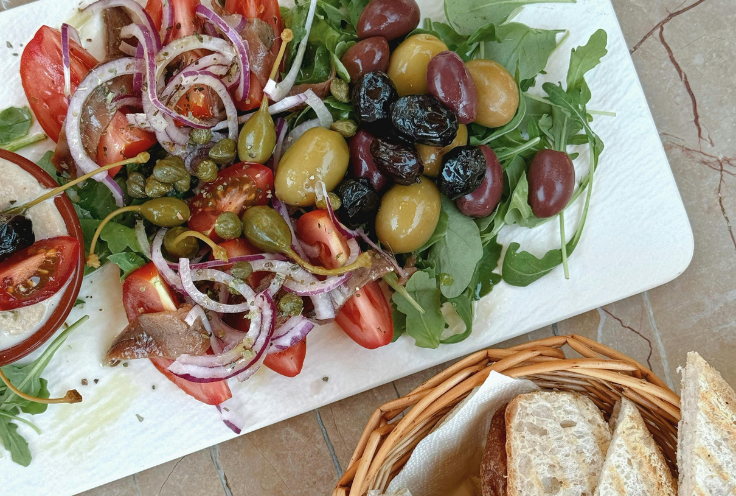
We know that people who eat mostly ultra-processed foods (the food that comes in packages with ingredients you can’t pronounce), tend to show signs of chronic low-grade immune activation (5). Those foods aren’t “toxic” or “inflammatory villains”, but they don’t give your system what it’s looking for. Your body has to work harder to maintain balance.
On the flip side, diverse whole foods support your gut microbiome (the trillions of bacteria living in your intestines). The gut microbiome helps train your immune system (6, 7, 8) and teach it what’s a threat and what’s not. They help to maintain the balance between different immune responses by producing compounds that your body uses to regulate inflammation.
Sleep is the foundation you might be ignoring
We all know those nights where we stay up late binge-watching, scrolling on the socials past midnight for three nights straight, then waking up and feeling like garbage. And then *surprise* we catch a cold or whatever is going around at work. That’s not a coincidence. Sleep and immune function are in constant conversation with each other. When you sleep well, your immune system works better. When your immune system is balanced, you sleep better (9).
Prioritizing sleep became a non-negotiable for me.
When you don’t sleep enough, your body starts showing signs of chronic low-grade stress. The same inflammatory markers that show up in people with heart disease risk. If you get a vaccine shot, prioritizing sleep the following night is crucial. We know that a lack of sleep can cut your antibody production nearly in half (9). Even one bad night can activate pathways that make your cells age faster (10). And it’s not done by just hitting seven hours. The quality of your sleep matters. The deep sleep stages and the architecture of your sleep cycles. That’s when your immune system does its maintenance work.
Stress is biological, not just mental
Stress-regulation, keeping cortisol levels low, that’s something we are all secretly aiming for. When you’re stressed, you’re not just mentally exhausted. Stress impacts your whole body, including the immune system.
Chronic stress (constant worry, overwhelm, juggling too much) weakens your defenses against threats while keeping your body in low-grade alert (11). Leaving you less protected and more likely to get inflamed. But the good news are, you can do something about it. When people address stress directly through therapy, stress reduction programs or mindfulness, their immune markers improve, with lasting effects (12).
Stress-management is not done in a day, it’s a process. Therapy, social connection, changing what’s causing the stress have real biological effects. Your mental state and immune state are connected.
Movement to support immune health
Regular, moderate movement is one of the most reliable ways to support your immune system. Walking 30 to 45 minutes per day can lower infection risk and help regulate inflammation (13). Your immune system likes consistency and movement that feels sustainable. But more isn’t always better. Marathon runners often get sick during heavy training because pushing too hard without recovery can temporarily suppress immune function. It’s the J-shaped curve: moderate is best, but extremes backfire.
Good news: you don’t have to become an athlete to support your immune defense. Focus on moderate and regular movement, that doesn’t leave you fully exhausted.
When “boosting” becomes dangerous
This is where the whole “boost your immune system” theory really falls apart, because here is how an overactive immune system actually looks like:
Allergies and autoimmune disease: Your body treating your joints and tissues like a dangerous invader. Your immune system is getting misdirected.
Cytokine storms: The chemical messengers spiraling out of control, where the inflammatory response causes more damage than the original threat. That’s what killed many people with severe COVID-19.
Chronic inflammation: The quiet kind that simmers for years, driving heart disease, messing with metabolism and speeding up aging.
In every case, the problem is dysregulation. The system doing too much, aiming at wrong targets or staying activated when it should calm down. You should’t aim for a “more active” immune system, but one that can smartly regulate itself.
Let’s talk about supplements
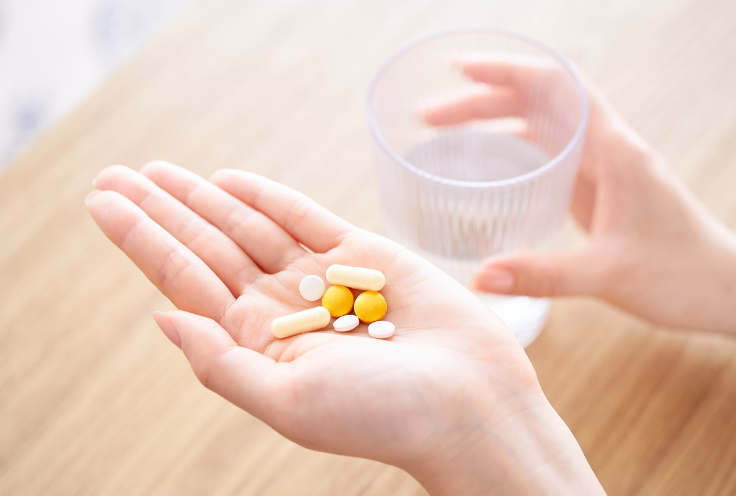
I’m a scientist, not your doctor. I can tell you what the research shows, but what you take is between you and your healthcare provider.
What the research shows (14, 15, 16, 17):
Vitamin D: If you’re deficient (which many people in northern climates are in winter), correcting that helps. But if you’re already getting enough, more doesn’t make you super-immune.
Vitamin C: For preventing colds we see minimal effects. Might help if you’re under extreme stress or deficient, but it’s not the shield it’s often marketed as.
Zinc: Taking it early when you feel a cold coming might slightly shorten it. But it’s not prevention and high doses long-term can cause problems.
You may see the pattern here. Supplements can fill real gaps but they can’t replace proper sleep, food choices, stress management and movement. They also can’t fix a lifestyle that’s running down your immune health.
If you think you’re deficient, talk to your doctor about testing. Please don’t just guess and hope.
What this actually means for you
Stop chasing immune boosters and support immune regulation instead.
Eat consistently well: Mediterranean-style patterns. Not because one food is magic, but because the whole pattern supports your body’s balance over time.
Prioritize sleep: 7-9 hours, non-negotiable.
Manage stress: Therapy, mindfulness, social connection. They have measurable immune effects.
Move regularly: Moderate and sustainable, not extreme.
Get vaccinated: The only evidence-based immune boost — especially in the elderly.
And maybe most importantly: let go of optimization pressure. Your immune system evolved over millions of years. It doesn’t need micromanagement. Rather focus on the basics to keep it well-regulated and balanced.
xxx Lena
References
(1) Zhou F et al. – Clinical course and risk factors for mortality of adult inpatients with COVID-19 in Wuhan, China: a retrospective cohort study, 2020, The Lancet, https://doi.org/10.1016/S0140-6736(20)30566-3
(2) Yang L et al. – The signal pathways and treatment of cytokine storm in COVID-19, 2021, Sig Transduct Target Ther, https://doi.org/10.1038/s41392-021-00679-0
(3) Cassa Macedo A et al. – Boosting the Immune System, From Science to Myth: Analysis the Infosphere With Google, 2019, Frontiers in Medicine, https://www.frontiersin.org/journals/medicine/articles/10.3389/fmed.2019.00165/full
(4) Koelman L et al. – Effects of Dietary Patterns on Biomarkers of Inflammation and Immune Responses: A Systematic Review and Meta-Analysis of Randomized Controlled Trials, 2021, Advances in Nutrition, https://pmc.ncbi.nlm.nih.gov/articles/PMC8803482/
(5) Hart MJ et al. – Dietary patterns and associations with biomarkers of inflammation in adults: a systematic review of observational studies, 2021, Nutrition Journal, https://pmc.ncbi.nlm.nih.gov/articles/PMC7955619/
(6) Fan Y et al. – Gut microbiota in human metabolic health and disease, 2021, Nature Reviews Microbiology, https://www.nature.com/articles/s41579-020-0433-9
(7) Zheng D et al. – Interaction between microbiota and immunity in health and disease, 2020, Cell Research, https://www.nature.com/articles/s41422-020-0332-7
(8) Shi H et al. – The gut microbiome as mediator between diet and its impact on immune function, 2022, Genes & Nutrition, https://pmc.ncbi.nlm.nih.gov/articles/PMC8956630/
(9) Irwin MR & Opp MR – Sleep Health: Reciprocal Regulation of Sleep and Innate Immunity, 2016, Neuropsychopharmacology, https://www.nature.com/articles/npp2016148
(10) Garbarino S et al. – Role of sleep deprivation in immune-related disease risk and outcomes, 2021, Communications Biology, https://pmc.ncbi.nlm.nih.gov/articles/PMC8602722/
(11) Segerstrom SC & Miller GE – Psychological stress and the human immune system: a meta-analytic study of 30 years of inquiry, 2004, Psychological Bulletin, https://www.proquest.com/docview/614463453
(12) Shields GS et al. – Psychosocial Interventions and Immune System Function: A Systematic Review and Meta-analysis of Randomized Clinical Trials, 2020, JAMA Psychiatry, https://jamanetwork.com/journals/jamapsychiatry/fullarticle/2766707
(13) Nieman DC & Wentz LM – The compelling link between physical activity and the body’s defense system, 2019, Journal of Sport and Health Science, https://pmc.ncbi.nlm.nih.gov/articles/PMC6523821/
(14) Mitra S et al. – Exploring the Immune-Boosting Functions of Vitamins and Minerals as Nutritional Food Bioactive Compounds: A Comprehensive Review, 2022, Molecules, https://pmc.ncbi.nlm.nih.gov/articles/PMC8779769/
(15) Al Mahmud A et al. – Clinically proven natural products, vitamins and mineral in boosting up immunity: A comprehensive review, 2023, Heliyon, https://www.sciencedirect.com/science/article/pii/S2405844023024994
(16) Hemilä H & Chalker E – Vitamin C for preventing and treating the common cold, 2013, Cochrane Database of Systematic Reviews, https://pubmed.ncbi.nlm.nih.gov/23440782/
(17) Wang MX et al. – Zinc Supplementation Reduces Common Cold Duration among Healthy Adults: A Systematic Review of Randomized Controlled Trials with Micronutrients Supplementation, 2020, American Journal of Tropical Medicine and Hygiene, https://pmc.ncbi.nlm.nih.gov/articles/PMC7356429/