
I am one of those people who can eat the same thing for breakfast every single morning. Yogurt, granola, fruits and berries. Some find that weird but I’m doing this since years, so you can guess that my weekly yogurt consumption is pretty high. At the supermarket, you can find a wide selection of yogurts from different brands with some labels promising live bacteria and probiotics. This creates a picture that yogurt provides me with thousands of different microbes and everything that is good for our gut health.
When I started my PhD, I learned more about the microbiome and the gut-brain axis. And looking back, that completely changed how I think about food today.
Depending on where you live, the yogurt on store shelves might not contain such a big variety of bacterial species and some may even be dead. On the other side the yogurt that you can make at home is fundamentally different from those in the supermarket.
Let me explain.
The problem with store-bought yogurt
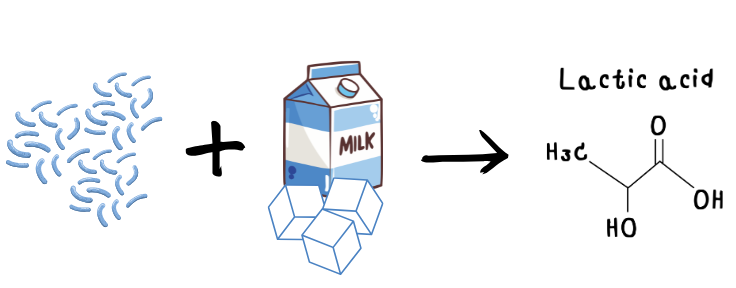
Yogurt is made through fermentation. You add bacterial cultures to milk (usually Lactobacillus and Streptococcus species). The bacteria feed on lactose (milk sugar) and produce lactic acid. This acid thickens the milk and creates yogurt’s tangy flavor.
But here’s the part that often gets overlooked:
Many commercial yogurts are produced with highly standardized fermentation processes. They are optimized for shelf life, consistency, and large-scale transport.
In some cases, this includes processing steps that reduce bacterial activity or diversity, and in certain products, post-fermentation heat treatment used to prevent further fermentation during storage and transport.
The result? The bacteria that originally fermented the yogurt may no longer be metabolically active or may be present only in limited diversity.
To compensate, manufacturers often add probiotics afterward. These are usually just two or three strains, commonly Lactobacillus acidophilus or Bifidobacterium. While the numbers on the label may look impressive, many of these bacteria do not reliably survive digestion or establish functional activity in the gut (1, 2).
Yogurt is legally regulated
In the EU (including Germany), products labeled “Joghurt” must contain live starter cultures at the end of shelf life, with defined minimum counts (1×10^7 live bacteria /gram) (3, 4).
So yes — yogurt legally has to contain living bacteria. But that does not mean all yogurts are biologically equivalent. “Live cultures” alone are not enough to define biological or health relevance. What matters is microbial activity, diversity and the metabolites produced during fermentation (5).
Traditionally fermented yogurt (the kind you make at home) often undergoes longer, less controlled fermentation. This allows microbial succession and results in greater bacterial diversity. The microbes remain alive, metabolically active and continue producing compounds such as short-chain fatty acids and bioactive peptides that interact with the immune system (6).
So store-bought yogurts vary depending on your geographical location and are different to homemade ones.
What I learned during my PhD
During my doctoral research, I spent a lot of time thinking about the immune system. Specifically, how it learns to distinguish between “safe” and “dangerous.”
Your immune system isn’t born knowing what to attack. It has to be trained and one of its main teachers is our gut microbiome. The bacteria in your gut constantly communicate with your immune cells. They produce molecules that tell your immune system to stay calm, to tolerate harmless things (like food) and to ramp up when there’s a real threat (like a pathogen) (7). But this only works if you have diverse gut bacteria.

Studies show that people who eat fermented foods (real, live fermented foods) have more diverse gut microbiomes. More diversity means better immune regulation, less inflammation and even better mental health (thanks to the gut-brain axis). One study published in Cell in 2021 found that participants who ate fermented foods for 10 weeks showed increased microbiome diversity and reduced inflammatory markers compared to a control group (8).
Why I make my own
So I started making my own yogurt.
Not because I’m a perfectionist or because I have tons of free time (I don’t). But because I know what live bacteria do for your health.
Fermenting yogurt is absurdly simple (I got this recipe from a friend):
- Heat milk to 82°C to kill unwanted bacteria (skip if you use pasteurized milk)
- Cool to 43°C
- Add a spoonful of live yogurt (your starter culture, e.g. a brand you trust)
- Keep warm (45°C) for 8-12 hours
- Refrigerate overnight (for better taste and texture)
- Done.
The yogurt I make has live and diverse bacteria that are still fermenting and produce beneficial compounds. On top: it tastes better, is cheaper and I know exactly what’s in it.
The bigger point
This isn’t really about yogurt. It’s about asking: What am I actually eating?
We’ve outsourced so much of our food to industrial processes. And in the name of convenience, shelf-life and scale, we’ve stripped food of the very things that make it nourishing.
Yogurt is just one example. But it’s everywhere:
- Store-bought bread is often no longer fermented with wild yeast (sourdough). It’s made with commercial yeast and dough conditioners.
- Vegetables are picked unripe, shipped thousands of miles and ripened with ethylene gas.
I’m not saying we need to make everything from scratch, because that’s not realistic. But some things are worth doing yourself.
Final thought
I don’t make yogurt to be “better” than anyone. I make it because I’ve read the research and know what live bacteria do for the immune system, the gut and the brain. And once I knew, I just couldn’t ignore it.
If you’re curious, try it and see how it goes. You might get surprised.
— Lena

References
- Donkor ON, et al. (2006). Survival of probiotic bacteria during gastrointestinal transit. Int Dairy J, 16(9):1026–1035.
- Meybodi NM, et al. (2020). Probiotic viability in yoghurt: a review. Trends Food Sci Technol, 105:1–11.
- EU Regulation (EC) No 1662/2006, amending Regulation (EC) No 853/2004 – definition and requirements for yogurt starter cultures.
- Milcherzeugnisverordnung (MilchErzV), Germany, §1 (2025). https://www.gesetze-im-internet.de/milchv/
- Marco ML, et al. (2021). The International Scientific Association for Probiotics and Prebiotics (ISAPP) consensus statement on fermented foods. Nat Rev Gastroenterol Hepatol. 18(3):196-208.
- Aryana KJ, Olson DW. (2017). A 100-year review: Yogurt. J Dairy Sci, 100(12):9987–10013.
- Cryan JF, et al. (2019). The microbiota–gut–brain axis. Physiol Rev, 99(4):1877–2013.
- Wastyk HC, et al. (2021). Gut-microbiota-targeted diets modulate human immune status. Cell, 184(16):4137–4153.